Hi, I need help to check on the code whether is it correct for segmentation as I’m unable to get the bounding boxes and the mask correctly.
import numpy as np

import cv2

from PIL import Image

from hailo_sdk_client import ClientRunner, InferenceContext

import os


# ---------------- CONFIG ----------------

HAR_PATH = "./modelA.har"

IMAGE_PATH = "./test.bmp"

INPUT_SIZE = (416, 416)

NUM_CLASSES = 2

CLASS_NAMES = \["fail", "pass"\]

CONF_THRESH = 0.75

IOU_THRESH = 0.4

MASK_THRESH = 0.5

TOP_K = 1  # only keep top 1 detection


# ---------------- HELPERS ----------------

def sigmoid(x):

    return 1 / (1 + np.exp(-x))


def softmax(x, axis=-1):

    x = x - np.max(x, axis=axis, keepdims=True)

    e = np.exp(x)

    return e / (np.sum(e, axis=axis, keepdims=True) + 1e-12)


def compute_iou(box, boxes):

    x1 = np.maximum(box\[0\], boxes\[:,0\])

    y1 = np.maximum(box\[1\], boxes\[:,1\])

    x2 = np.minimum(box\[2\], boxes\[:,2\])

    y2 = np.minimum(box\[3\], boxes\[:,3\])

    inter = np.maximum(0, x2-x1) \* np.maximum(0, y2-y1)

    a1 = (box\[2\]-box\[0\])\*(box\[3\]-box\[1\])

    a2 = (boxes\[:,2\]-boxes\[:,0\])\*(boxes\[:,3\]-boxes\[:,1\])

    return inter / (a1 + a2 - inter + 1e-12)


def non_max_suppression(boxes, scores, iou_thresh=0.4):

    idxs = np.argsort(scores)\[::-1\]

    keep=\[\]

    while idxs.size>0:

        cur = idxs\[0\]

        keep.append(cur)

        if idxs.size==1:

            break

        ious = compute_iou(boxes\[cur\], boxes\[idxs\[1:\]\])

        idxs = idxs\[1:\]\[ious < iou_thresh\]

    return keep


# ---------------- PROCESS ----------------

def preprocess_image(path):

    img = Image.open(path).convert("RGB").resize(INPUT_SIZE)

    arr = np.array(img).astype(np.float32)/255.0

    arr = np.expand_dims(arr, axis=0)  # NHWC

    return arr, img


def reconstruct_har(outputs, orig_img_size):

    """

    Reconstruct boxes and masks from HAR outputs (YOLOX-mask style)

    """

    img_w, img_h = orig_img_size

    out0, out1, out2 = outputs


    # --- proto map ---

    proto = np.transpose(out0, (0,3,1,2))  # NHWC -> NCHW

    proto_map = proto\[0\]  # (mask_dim, H, W)


    # --- mask coefficients ---

    mask_coeffs = out1\[0,0,:,:\]  # (num_anchors, mask_dim)


    # --- raw predictions ---

    pred_raw = out2\[0,0,:,:\]     # (num_anchors, last_dim)


    # --- decode cx, cy, w, h ---

    cx = sigmoid(pred_raw\[:,0\]) \* INPUT_SIZE\[0\]    # already normalized 0-1

    cy = sigmoid(pred_raw\[:,1\]) \* INPUT_SIZE\[1\]


    # HAR outputs w/h are usually log-space relative to grid cell (YOLOX style)

    stride = INPUT_SIZE\[0\] / out0.shape\[1\]  # assume square input

    w = np.maximum(pred_raw\[:,2\], 1.0) \* stride  # ensure minimum size 1

    h = np.maximum(pred_raw\[:,3\], 1.0) \* stride


    print("cx:", cx.min(), cx.max())

    print("cy:", cy.min(), cy.max())

    print("w:", w.min(), w.max())

    print("h:", h.min(), h.max())


    # --- construct boxes ---

    x1 = np.clip(cx - w/2, 0, img_w)

    y1 = np.clip(cy - h/2, 0, img_h)

    x2 = np.clip(cx + w/2, 0, img_w)

    y2 = np.clip(cy + h/2, 0, img_h)


    boxes = np.stack(\[x1, y1, x2, y2\], axis=1)


    # --- class probabilities ---

    class_logits = pred_raw\[:, -NUM_CLASSES:\]

    probs = softmax(class_logits, axis=1)

    class_ids = np.argmax(probs, axis=1)

    scores = probs\[np.arange(len(probs)), class_ids\]


    # --- filter by confidence ---

    keep_mask = scores > CONF_THRESH

    boxes = boxes\[keep_mask\]

    scores = scores\[keep_mask\]

    class_ids = class_ids\[keep_mask\]

    mask_coeffs = mask_coeffs\[keep_mask\]


    if len(scores) == 0:

        print("No detections above threshold.")

        return \[\], \[\], \[\], \[\]


    # --- NMS ---

    keep_idx = non_max_suppression(boxes, scores, IOU_THRESH)

    boxes = boxes\[keep_idx\]

    scores = scores\[keep_idx\]

    class_ids = class_ids\[keep_idx\]

    mask_coeffs = mask_coeffs\[keep_idx\]


    # --- keep top K detections ---

    if len(scores) > TOP_K:

        top_idx = np.argsort(scores)\[-TOP_K:\]

        boxes = boxes\[top_idx\]

        scores = scores\[top_idx\]

        class_ids = class_ids\[top_idx\]

        mask_coeffs = mask_coeffs\[top_idx\]


    # --- reconstruct masks ---

    final_masks = \[\]

    for coeff in mask_coeffs:

        mask = np.tensordot(coeff, proto_map, axes=\[0,0\])

        mask = sigmoid(mask)

        mask = cv2.resize(mask, (img_w, img_h))

        mask = (mask > MASK_THRESH).astype(np.uint8)

        mask = cv2.morphologyEx(mask, cv2.MORPH_OPEN, np.ones((3,3), np.uint8))

        final_masks.append(mask)


    return boxes, scores, class_ids, final_masks


def draw_results(img_pil, boxes, scores, class_ids, masks):

    img = np.array(img_pil).copy()

    overlay = img.copy()

    for i, box in enumerate(boxes.astype(int)):

        x1,y1,x2,y2 = box

        cls = CLASS_NAMES\[int(class_ids\[i\])\]

        score = float(scores\[i\])

        color = (0,255,0) if cls=="pass" else (0,0,255)

        cv2.rectangle(img, (x1,y1), (x2,y2), color, 2)

        cv2.putText(img, f"{cls} {score:.2f}", (x1, max(y1-6,0)), cv2.FONT_HERSHEY_SIMPLEX, 0.5, color, 1)


        # overlay mask

        if masks:

            m = masks\[i\]

            colored = np.zeros_like(img)

            colored\[:,:,1\] = m\*255  # green mask

            alpha = 0.4

            overlay = cv2.addWeighted(overlay, 1.0, colored, alpha, 0)


    out = cv2.addWeighted(img, 1.0, overlay, 0.4, 0)

    out = cv2.cvtColor(out, cv2.COLOR_RGB2BGR)

    cv2.imwrite("har_result_wire.png", out)

    print("Wrote har_result_wire.png with mask and box.")


# ---------------- MAIN ----------------

def main():

    input_data, pil_img = preprocess_image(IMAGE_PATH)

    runner = ClientRunner(har=HAR_PATH)


    with runner.infer_context(InferenceContext.SDK_NATIVE) as ctx:

        outputs = runner.infer(ctx, input_data)


    for i, out in enumerate(outputs):

        print(f"Output {i}: shape={out.shape}")


    boxes, scores, class_ids, masks = reconstruct_har(outputs, pil_img.size\[::-1\])


    if len(boxes) > 0:

        print("Detections:")

        for i in range(len(boxes)):

            print(f" - {CLASS_NAMES\[int(class_ids\[i\])\]} {scores\[i\]:.3f} box {boxes\[i\].astype(int).tolist()}")

        draw_results(pil_img, boxes, scores, class_ids, masks)

    else:

        print("No detections after postprocessing.")


if \__name_\_ == "\__main_\_":

    main()
I’m not sure is the code incorrect or is the har itself converted from onnx model that affects the segmentation
I convert the onnx model to har using following command
hailo parser onnx modelA.onnx
(I got tried using hailomz but fail to convert it, only this command success convert the model to har)
below is about the har info
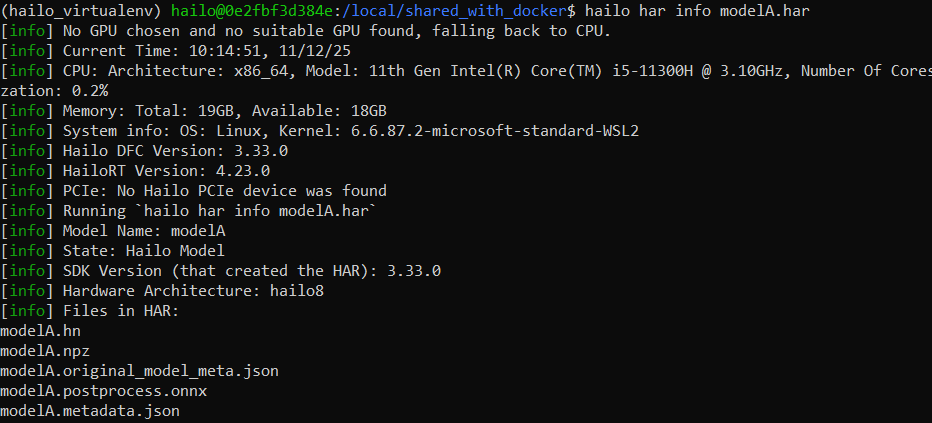
and i try to do segmentation with the original onnx model with this tutorial and it can segment the images correctly and the following code to test out the segmentation
https://dev.to/andreygermanov/how-to-implement-instance-segmentation-using-yolov8-neural-network-3if9#join_masks
import onnxruntime as ort

import numpy as np

from PIL import Image

import cv2

import matplotlib.pyplot as plt


yolo_classes = \["fail", "pass"\]


# --- Helper functions ---

def sigmoid(z):

    return 1 / (1 + np.exp(-z))


def get_mask(row, box, img_width, img_height):

    mask = row.reshape(104,104)

    mask = sigmoid(mask)

    mask = (mask > 0.5).astype('uint8')\*255

    x1, y1, x2, y2 = box

    mask_x1 = round(x1 / img_width \* 104)

    mask_y1 = round(y1 / img_height \* 104)

    mask_x2 = round(x2 / img_width \* 104)

    mask_y2 = round(y2 / img_height \* 104)

    mask = mask\[mask_y1:mask_y2, mask_x1:mask_x2\]

    img_mask = Image.fromarray(mask, "L")

    img_mask = img_mask.resize((round(x2-x1), round(y2-y1)))

    return np.array(img_mask)


def get_polygons(mask):

    contours, \_ = cv2.findContours(mask, cv2.RETR_EXTERNAL, cv2.CHAIN_APPROX_SIMPLE)

    polygons = \[\]

    for contour in contours:

        contour = contour.reshape(-1,2)

        polygons.append(contour)

    return polygons


def intersection(box1, box2):

    x1 = max(box1\[0\], box2\[0\])

    y1 = max(box1\[1\], box2\[1\])

    x2 = min(box1\[2\], box2\[2\])

    y2 = min(box1\[3\], box2\[3\])

    return max(0, x2-x1) \* max(0, y2-y1)


def union(box1, box2):

    area1 = (box1\[2\]-box1\[0\])\*(box1\[3\]-box1\[1\])

    area2 = (box2\[2\]-box2\[0\])\*(box2\[3\]-box2\[1\])

    return area1 + area2 - intersection(box1, box2)


def iou(box1, box2):

    return intersection(box1, box2) / union(box1, box2)


# --- Run model ---

def run_model(input):

    model = ort.InferenceSession("modelA.onnx")

    outputs = model.run(None, {"images": input})

    return outputs


# --- Process outputs ---

def process_output(outputs, img_width, img_height):

    output0 = outputs\[0\]\[0\].transpose()

    output1 = outputs\[1\]\[0\].astype("float")

    boxes = output0\[:, 0:6\]

    masks = output0\[:, 6:\]

    output1 = output1.reshape(32, 104\*104)

    masks = masks @ output1

    boxes = np.hstack((boxes, masks))


    objects = \[\]

    for row in boxes:

        prob = row\[4:6\].max()

        if prob < 0.5:

            continue

        class_id = row\[4:6\].argmax()

        label = yolo_classes\[class_id\]

        xc, yc, w, h = row\[:4\]

        x1 = (xc - w/2)/416 \* img_width

        y1 = (yc - h/2)/416 \* img_height

        x2 = (xc + w/2)/416 \* img_width

        y2 = (yc + h/2)/416 \* img_height

        mask = get_mask(row\[6:\], (x1, y1, x2, y2), img_width, img_height)

        polygons = get_polygons(mask)

        objects.append(\[x1, y1, x2, y2, label, prob, mask, polygons\])


    # Non-max suppression

    objects.sort(key=lambda x: x\[5\], reverse=True)

    result = \[\]

    while objects:

        result.append(objects\[0\])

        objects = \[obj for obj in objects\[1:\] if iou(obj, result\[-1\]) < 0.5\]


    return result


# --- Load image ---

img = Image.open("test.bmp").convert("RGB")

img_width, img_height = img.size

img_resized = img.resize((416,416))

input_array = np.array(img_resized).transpose(2,0,1).reshape(1,3,416,416).astype('float32')/255.0


# --- Run model & process output ---

outputs = run_model(input_array)

results = process_output(outputs, img_width, img_height)


for i, out in enumerate(outputs):

    print(f"ONNX output{i} shape={out.shape}, min={out.min()}, max={out.max()}, mean={out.mean():.4f}")


# Save for comparison

import os

os.makedirs("onnx_diagnostics", exist_ok=True)

for i, out in enumerate(outputs):

    np.save(f"onnx_diagnostics/output{i}.npy", out)


# --- Draw results ---

img_np = np.array(img)

for x1, y1, x2, y2, label, prob, mask, polygons in results:

    \# overlay mask

    for poly in polygons:

        cv2.drawContours(img_np\[int(y1):int(y2), int(x1):int(x2)\], \[np.array(poly)\], -1, (0,255,0), -1)

    \# draw bounding box

    cv2.rectangle(img_np, (int(x1), int(y1)), (int(x2), int(y2)), (255,0,0), 2)

    \# label

    cv2.putText(img_np, label, (int(x1), int(y1)-5), cv2.FONT_HERSHEY_SIMPLEX, 0.7, (255,255,255), 2)


# --- Show image ---

plt.figure(figsize=(10,10))

plt.imshow(img_np)

plt.axis('off')

plt.show()


cv2.imshow("Segmentation Result", img_np)

cv2.waitKey(0)

cv2.destroyAllWindows()
also have question is it normal that it will change the output shape when it convert from onnx to har
the original onnx model has this shape
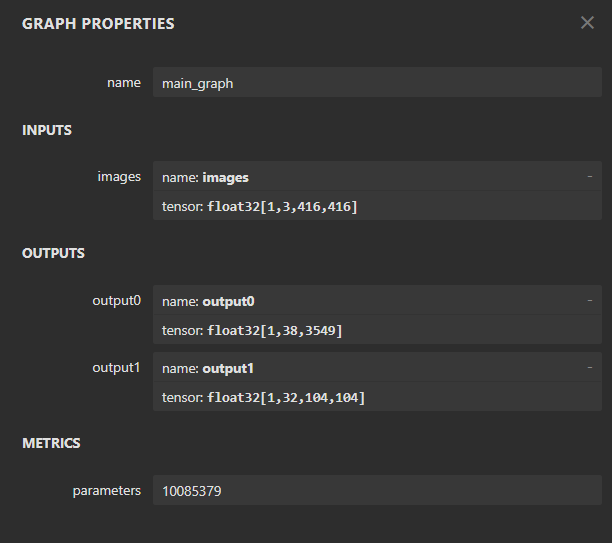
after convert it to har, it becomes 3 output shape
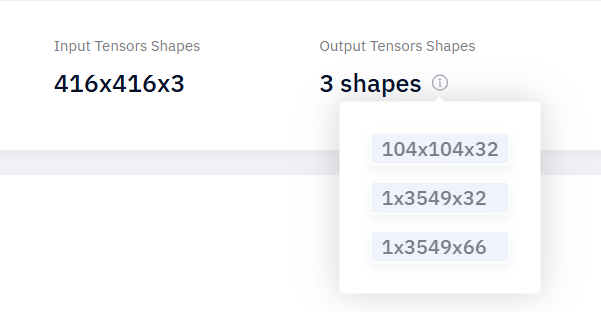
is it because the output shape has changed that cause the segmentation failed
(something like it affect the boxes channel? (cx, cy, w, h))
please help me i dont now what i do, much appreciate 